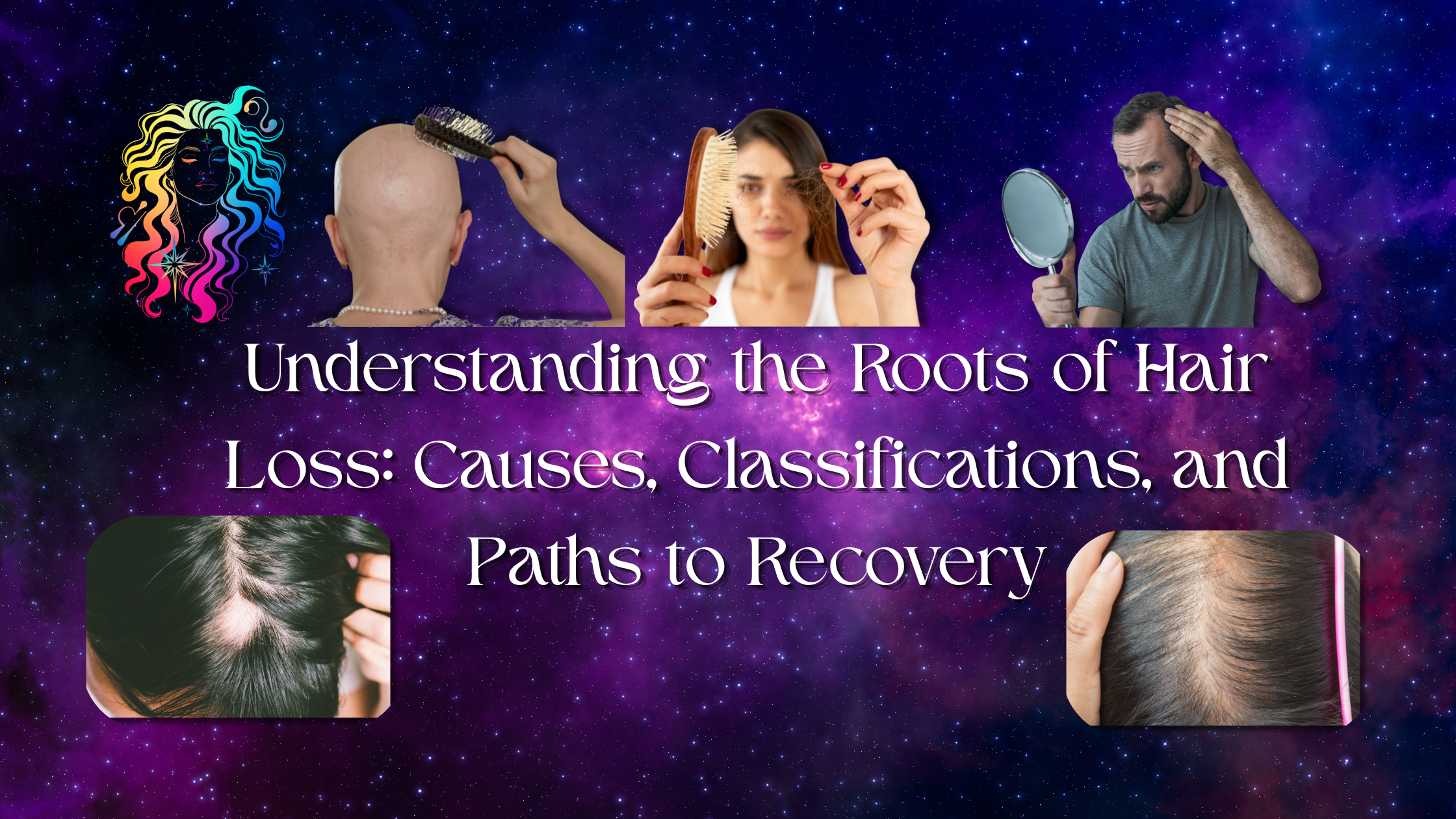
Just as every constellation in the night sky has its own distinct origin, every form of hair loss stems from a unique underlying mechanism. Hair thinning and shedding are deeply personal experiences, yet all too often, they are met with generic, one size fits all advice. In reality, hair follicles respond to a delicate interplay of genetics, hormonal fluctuations, physical strain, immune responses, and systemic wellness. Identifying the precise cause is not merely a formality; it is the single most critical step in determining an effective treatment plan.
The most widespread form of thinning is androgenetic alopecia, commonly known as male, or female, pattern hair loss. Driven primarily by genetics and endocrine signals, this condition occurs when hair follicles exhibit an inherited sensitivity to dihydrotestosterone, an androgen hormone derived from testosterone. Over time, exposure to this hormone causes susceptible follicles to undergo miniaturization, producing progressively finer, shorter strands until the follicles become entirely inactive. In men, this often manifests as a receding hairline or thinning crown, while in women, it frequently presents as diffuse widening along the center part, sometimes exacerbated by conditions such as polycystic ovary syndrome. Because dormant follicles eventually lose the regenerative capacity to produce hair, early intervention is vital. Clinically supported options include minoxidil to extend the active growth phase, prescription medications to modulate hormonal activity, and low-level laser therapy to stimulate cellular metabolism. For stabilized loss, surgical restoration can restore density, though ongoing therapy remains necessary to preserve existing native hair.
In contrast to the gradual progression of pattern loss, telogen effluvium acts as an abrupt pause on the hair cycle. Under normal conditions, the vast majority of scalp follicles are actively growing, but significant systemic stressors can prematurely push a substantial percentage of hairs into the resting, or telogen, phase. Triggers range from severe emotional trauma and acute illness to childbirth, major surgery, rapid weight loss, and severe nutritional deficiencies. Because the telogen phase naturally lasts several months, individuals typically do not notice excessive shedding until two to three months after the initiating event. The reassuring reality of telogen effluvium is its transient nature. Once the underlying trigger is resolved, systemic health is restored, and key nutritional markers are corrected, shedding tends to subside within three to six months, with visible recovery of hair density taking place over the following year.
Hair loss can also arise from external mechanical stress rather than internal pathology, as seen in traction alopecia. Daily styling choices that rely on tight ponytails, snatched buns, heavy extensions, or tightly woven braids place continuous mechanical tension on delicate follicles. The condition typically reveals itself subtly through scalp tenderness, localized inflammation, and thinning along the hairline or temples. Traction alopecia is entirely preventable and readily reversible in its early stages simply by rotating styles, loosening tension, and embracing low manipulation routines. However, if chronic strain persists unchecked, it can eventually cause irreversible damage and permanent follicular scarring.
When the immune system misidentifies follicular tissue as foreign, the result is alopecia areata, an autoimmune disorder characterized by the sudden appearance of smooth, circular patches of hair loss. The immune attack sends follicles into a state of arrested development without permanently destroying them, meaning that regrowth is always possible, though the condition can follow an unpredictable course of flare ups and remissions. In its more extensive manifestations, it can progress to complete scalp baldness, known as alopecia totalis, or the loss of all hair across the scalp and body, termed alopecia universalis. Management focuses on dampening the localized immune response through targeted medical therapies, including topical and injectable corticosteroids or newer immune modulating agents.
Far more urgent is scarring alopecia, or cicatricial alopecia, a rare collection of inflammatory disorders that directly attack the stem cell reservoir located in the upper portion of the hair follicle. As the acute inflammation destroys these vital regenerative cells, the follicle is replaced with fibrous scar tissue, rendering future hair growth impossible. Because lost follicles cannot be reclaimed, immediate clinical intervention is essential to arrest further progression. Warning signs demand prompt medical attention, including persistent scalp burning, intense itching, tenderness, perifollicular redness, and smooth, shiny patches where follicular pores have disappeared.
Finally, anagen effluvium represents a rapid and widespread disruption of the follicle’s active metabolic machinery during the growth phase itself. Most frequently associated with chemotherapy and radiation, it can also stem from specific pharmaceutical toxicities or severe chemical exposures. Because the dividing cells of the hair bulb are targeted directly, shedding is swift and substantial. Fortunately, because the underlying follicular architecture and stem cells typically remain intact, hair begins to regenerate once the causative agent is eliminated from the body.
Ultimately, hair is an exquisitely sensitive barometer of holistic physical health and external habits. Shedding is not a singular diagnosis, but rather a symptom pointing toward a distinct physiological story. Because remedies that resolve one condition may prove completely ineffective for another, navigating hair loss requires patience, consistency, and professional guidance. Consulting a board certified dermatologist or certified trichologist ensures that the underlying root cause is properly identified, allowing for an evidence-based plan tailored to the unique journey of each individual.